Chihuahuas and Wolves

(A Belabored Metaphor)

Fear of the unknown nipped at my heels until the instant I heard the wild, joyful howl of the new. Then it slunk away to the shadows.

I looked back in amazement. I’d been afraid of that? That pestering bundle of noise and fury was just a pack of poorly trained, tempest-in-a-teacup chihuahuas. And all along, all around me the whole living clan of wolfkind had been singing to the moon, calling me to join them.
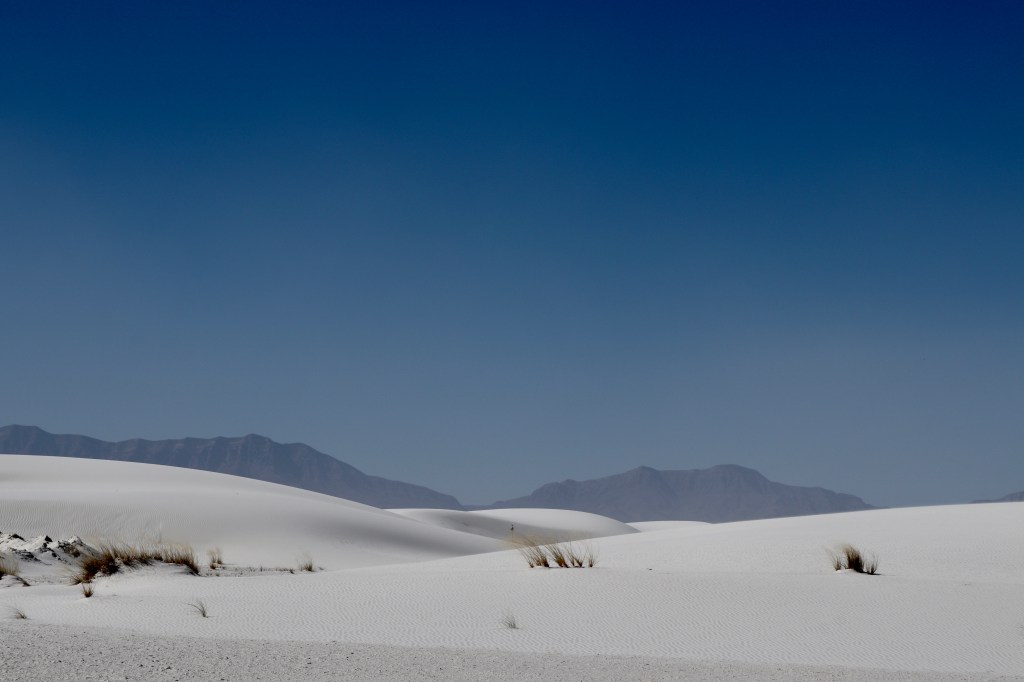
My first venture into truly new territory: White Sands National Park in New Mexico. Image shows dunes of snow-white sand in the foreground giving way to hazy blue mountains in the center. In the background is a gargantuan sky of pure, deep, glowing cobalt blue.

I had mistaken chihuahuas for wolves. Chihuahuas. For wolves.

In October I spent a couple of weeks back in Albuquerque at my old house. Summoning up the courage to start off again was surprisingly hard. The familiar was just so… familiar, and driving off into the unknown for a second time… It wasn’t that I wanted to stay put; I just didn’t want to have to be brave.

Now that I have the leisure, though, it’s time to take a long, hard look at those chihuahuas, to see what made them so scary. (Note: I have known some charming chihuahuas. These weren’t them.)

Here is what daunted me:

  • Where to get water
  • Where to do laundry
  • Where to dump gray water
  • Where to dump trash
  • Where to refill propane

(I have apps that pinpoint all these services, but still. Knowing others have accessed them doesn’t mean I’ll be able to. Does it?) (But back to our chihuahuas.)

  • Refilling prescriptions
  • Getting stuck on back roads
  • Mechanical breakdowns
  • Awkward social encounters
  • Unpleasant social encounters
  • Social encounters
  • Having no social encounters
  • Parking a large vehicle
  • Managing energy-limiting chronic illnesses
  • Being too cold
  • Being too hot
  • Having my solar-powered battery system break down
  • Running out of propane before I’ve had my morning tea

Well. You’re getting tired of chihuahuas, and they’re not even yours. But trust me, there are more.

Oddly, I had not been daunted by:

  • Mountain lions
  • Bears
  • Serial killers

I just couldn’t see how dauntedness would help.

In six months, though, the biggest problems I’ve actually encountered are:

  • Pack rats
  • House flies
  • A leaky window
  • Refilling prescriptions

Just one little chihuahua made it from the yappy list to the biting one, and it didn’t really draw blood. Unexpected chihuahuas appeared—as they do—but I lived to tell the tale—as one does, with chihuahuas.

I’m not sure why, from the safety of my house, they looked like wolves. Maybe I was seeing their shadow cast into the future. When evening draws in, shadows look huge. Focusing on shadows, I feared for my future self.

But when the future becomes now, under bright midday sun, shadows shrink. You look down—way down—to your ankles to see fuzzy Napoleon complexes in collars jingling with rabies tags.

Meanwhile, all around you, another song sounds—eerie, hair-raising, terrifying at times. Your heart leaps at the gobsmacking, glorious, wild, spine-tingling, yowling surprise of the New.

Image shows a single dune, as tall as a wall. It is striped by dozens of vertical rivulets of sand. At the very top of the photo is a horizontal strip of that ultra-vibrant blue sky.

Some of you may have realized earlier in life that one cannot encounter the new without also encountering the unknown. My brain understood that, but the reality didn’t sink into my bones until I disinterred them from familiar ground.
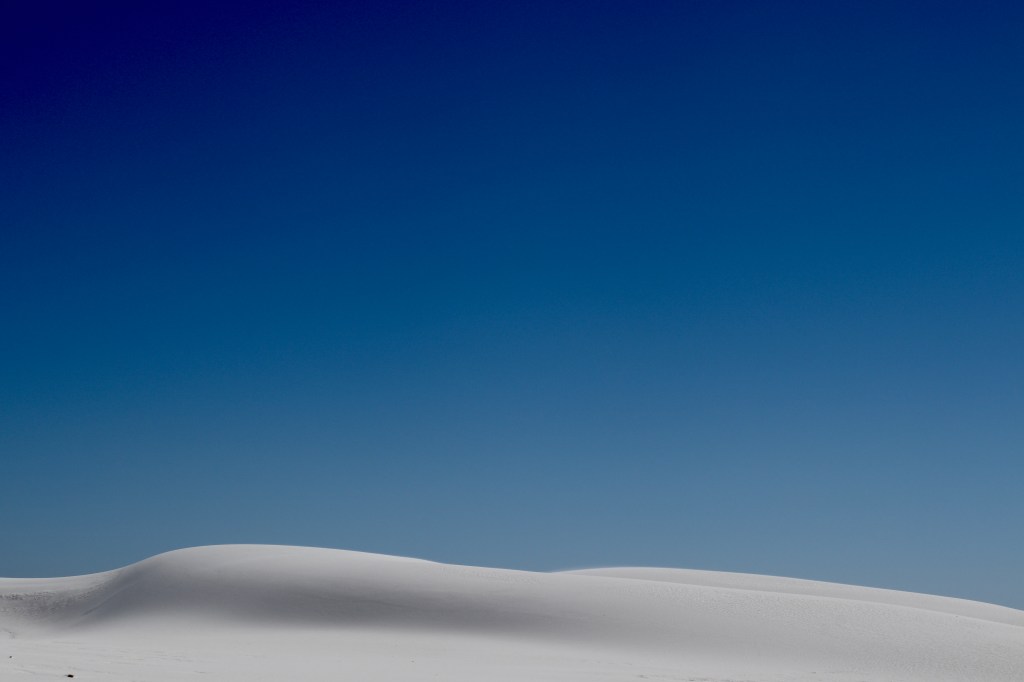
In this image the sky glories over softly rounded dunes and their equally soft shadows. The blue and white are so intense you almost feel like you’re looking at pure light.

The tame and the wild, the unknown and the new, the future and the now. What-ifs vs. lived experience. I’ll probably come back to these ideas in future posts—in fact, I know I will. Stories tend to replay in our lives. Their themes come around again and again, like ever-larger tree rings wrapping around our heartwood. When I penned this a month ago, I had just cast anchor again and was riding an exhilarating wave of discovery. Since then, I’ve encountered more anxiety and some genuine fear.

Just because you’ve heard the wolves, that doesn’t mean chihuahuas no longer exist. Surprise can hush them for a time.

But only for a time.
A Rolling Stone

The last thing I have is roots.

The last thing I want is to be earthed in one place. I have burned to fly for years.

So why—why, why?—am I reviving this long-dormant blog that honors trees, whose roots fix them in one place for life? Who cannot move, ever? Who are housebound from birth to death? And why now, when I have finally shed what tied me down and regained at least some of an animal’s birthright of movement?

Let me catch you up on some backstory. For the last five years, I have been almost entirely housebound with chronic illnesses. I could go grocery shopping every couple of weeks and seek medical care, but otherwise I looked at walls. I stared at the ceiling. I rested. I could seldom read, or watch movies, or listen to music.

I watched trees grow—slowly—in my small, much-loved, walled garden. Birds were my companions there, and lizards, and 6- and 8-legged beings whose paths crossed mine. I was a tree, though a poorly adjusted one, planted in the Adirondack chair, envious of the birds who could come and go as they pleased. The lockdown the healthy found so difficult during the pandemic had been my lot for years, with no walks outdoors, no excursions for take-out, no hope of an end.

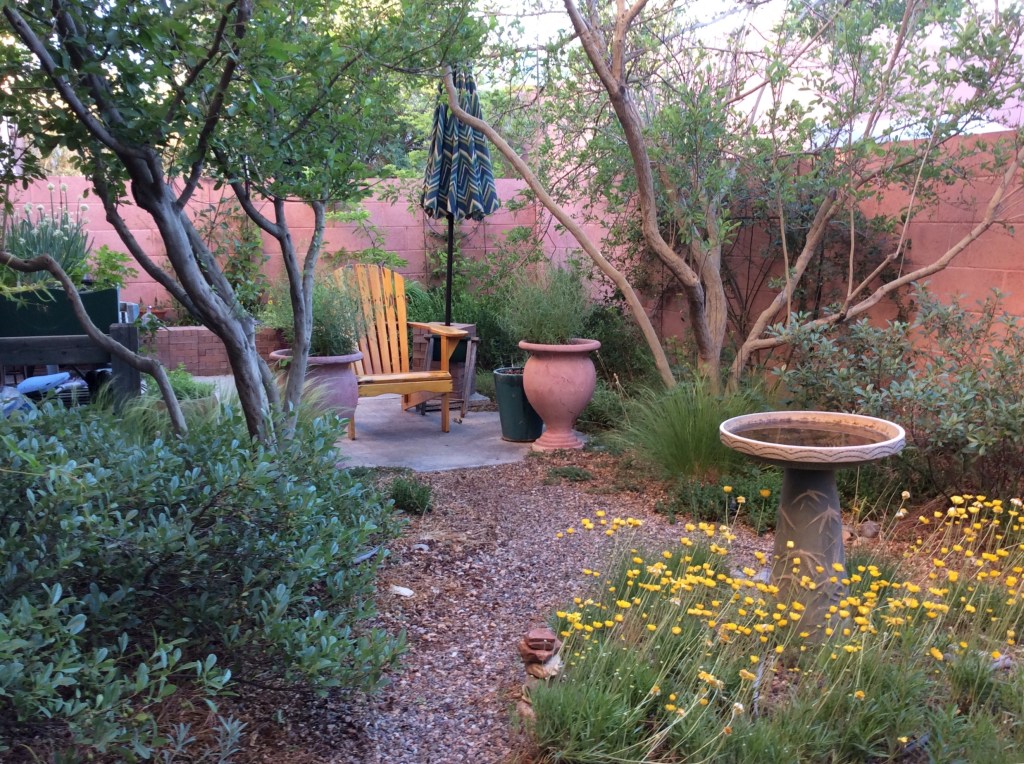
Image shows the patio of a small garden, with potted plants, a wooden Adirondack chair, and a folded sun umbrella. In the foreground is a birdbath, greenery, a patch of yellow flowers, and a gravel path. The garden is lovely (if I may say so), but you cannot see over the walls.

Then I was fortunate enough to be accepted as a patient (and guinea pig) at one of the best research and treatment clinics in the country. With knowledgeable medical care, I have been slowly, partially freed, improving from 95% housebound to perhaps 80%. Instead of four hours a day of “feet on the floor” time, I often have six. Despite that huge, 15% gain, it was not enough to get me out to the wilderness I love, or to let me travel to visit family.

Then I realized that part of what kept me housebound was the actual house: the weight and heft of foundation, beams, and drywall, the burden of upkeep, the bulk of everything owned to fill it.

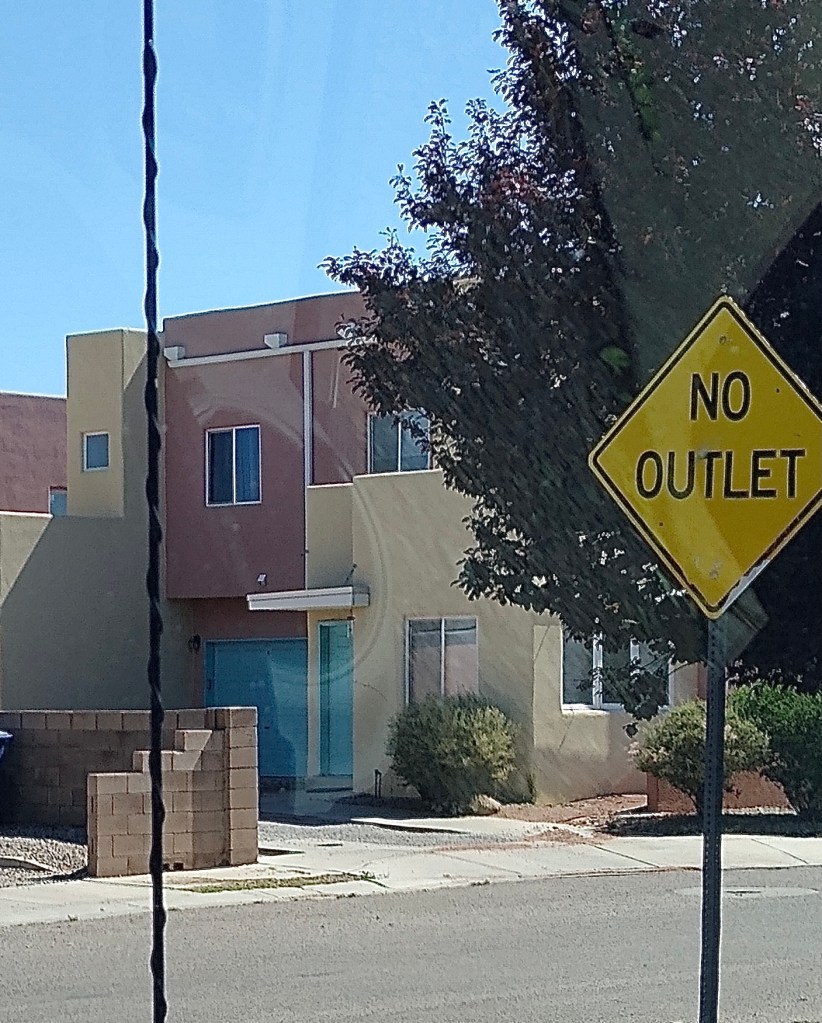
Image shows a row of Pueblo-style townhouses in southwestern colors of sandstone, maize, and turquoise in a narrow driveway, as seen through the windshield of a vehicle (with a radio antenna very much in the way). A street sign reads “No Outlet.Symbolism? You decide.

What if I exchanged a fixed dwelling for a mobile one? After two years of thought, research, planning, work, and help, that became reality.

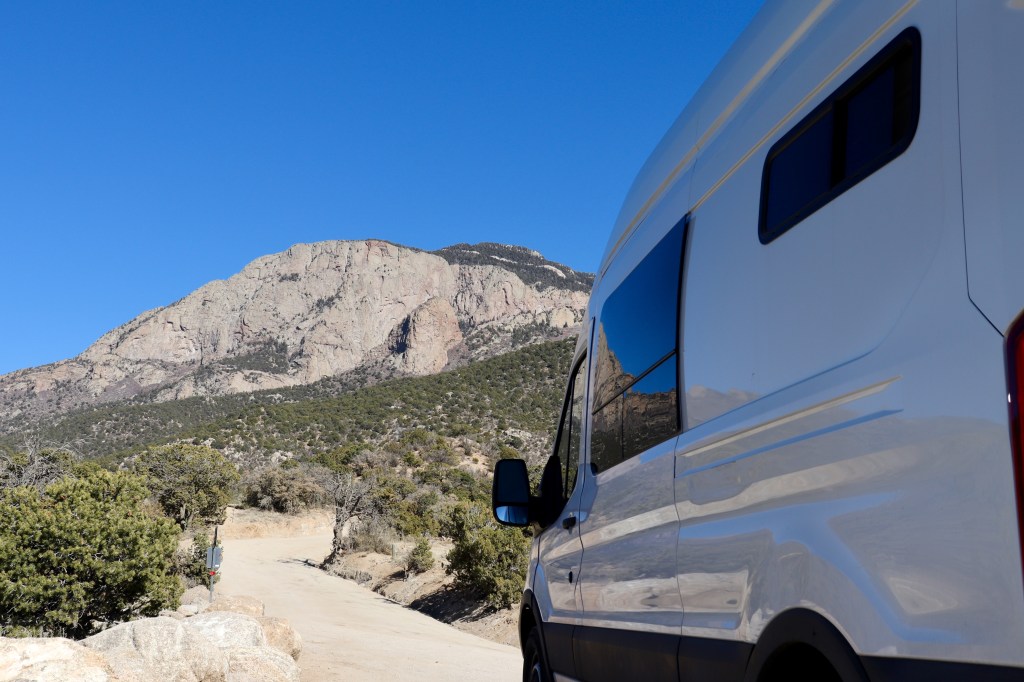
Image shows a white camper van heading up a dirt road on a glorious, blue-sky day through a landscape of juniper and piñon trees. A dramatic, rocky bluff beckons in the background.

Which leads us back to the present. For the last five months, I have been a nomad, doing things I could not when rooted in place: visiting family, exploring new places, listening to thunder rumbling over the mountains, wondering every day what I would see from my back doors. I mostly go to beautiful places so that I can lie down in them, but still. Movement has been glorious.

Image shows a white camper van from behind. It is in the distance, heading down a gravel road through cottonwoods in various shades of (let’s be realistic) uninspiring, autumnal brown. Puffy, white clouds dot the sky.

So why, now that I am a rolling stone, am I reviving a blog whose first premise is that trees have much to teach us?

Because I still think they have much to teach us—lessons I have not learned, let alone mastered. Trees are experts in long-term situations, at thriving when no change is possible, when ”fight, flight, or freeze” don’t apply. They endure and adapt rather than running, denying, or conquering, and to those with conditions that cannot be run from, denied, or conquered, they offer glorious examples of how to flourish. They remind us that we can deepen at the roots and broaden at the crown, prioritize what branches to keep or discard, offer shelter to others, and grow greenly despite incurable hardship.

Image shows a twisted piñon tree. It is growing almost horizontally, with its roots exposed and its trunk spiraling. Half its bark is missing, but the needles are still green and vibrant.

They also remind us of the value of being. Trees do good in the world simply because they are, and they are trees. They do not check things off their to-do lists, or exchange labor for money, or earn their right to live through their productivity. But because they breathe and grow and green, we have oxygen to breathe, shade to cool our planet, birds and earthworms and lizards and squirrels and bobcats and bees to keep this world in balance.

And they give us joy. That is no small thing.

Image shows the white trunks of a lovely little aspen grove growing with lush, green grass and a generous supply of dandelion seed heads.

If there is one message I want to underlie this blog, it is that you have value because you are, because you live and are human. Life is a gift, given and received, and you can give and receive life generously whether you accomplish a to-do list or not. You have value because you breathe and grow and green.

That is the story of trees.

____________________

Note: I don’t know what shape this blog will take. I am not good at niches. So we may cover #vanlife, recipes on the road, wonders and marvels, Trees I Have Seen, chronic illness, and the works. This blog, like me, will be nomadic, and you never know when I might show up on your doorstep.*

*But you are more likely to find out if you subscribe to receive email notifications of new posts.