On Openness, Vulnerability, and Conflict
Prelude
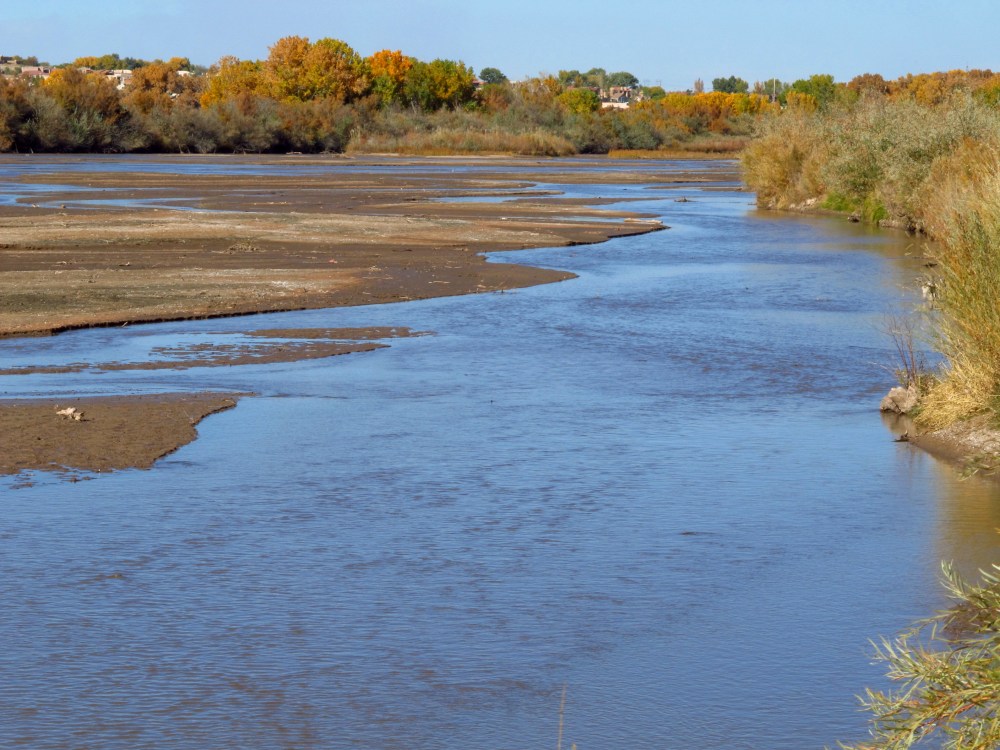
A clear pool is a rare find on this river. The Rio Grande is only half water; the other half flows with the memory of sandstone. The red-brown stone of Abo, the orange of Yeso, yellow Glorieta—275 million years of earth’s being, worn to essence and carried in the heart of the river.
Sometimes you’ll find a slow place. The sand settles. The water clears. Sunlight shines through without hindrance. Tiny fish cast flickering lights as they dart back and forth in the slow water. They are hatchlings, and their skin is translucent. Light passes through them in places, reflects in others. They look like ripples of sand on the river bed.
On a sandbar in deeper water, mallards squabble. Quack. Flap. Huff and trade places. Politics, and not the serious kind.
A screech overhead—frantic wing beats, piercing cries. Small birds harry a Cooper’s hawk, chasing, wheeling, diving. No mere squabble, this; no politics. This is war. Their shadows cross the pool, and the fish scatter. They’re at no risk but flee by instinct. Sometimes transparency—the free passage of light without hindrance—is a good. Sometimes it’s a danger. The trick is to know the difference.
* * * * * * *

Fugue I
Openness or exposure. Openness: the quality of being frank, truthful, candid. But also unprotected, doors wide to all comers. An implied safety. Confidence.
Exposure: being laid bare. It implies vulnerability, to the elements or to harm. But it also suggests hidden things brought to light: lies, plots, weaknesses.
Weaknesses. There’s the rub. Being transparent with our strengths—that’s easy. Exposure of our weaknesses… Some see it as shame, a blow to the ego. Others see it as the root of resilience. Our perspective determines our behavior, and the shadows we flee from, whether on personal, professional, or cultural levels.
Openness or exposure. In the sciences, “open data” is the rallying cry of a movement I’ve been following with interest. Science depends on replicability: the same experiment, run by different people, should yield the same results. The idea of open data is to make that process easier. Scientists provide free access to their experiment’s pool of data, along with information about methods and conflicts of interest. At its best, openness fosters collaboration, integrity, and accuracy. It speeds progress when the science is sound. It minimizes harm when the science is weak.
Harm: because science can inform policies that affect lives. Social attitudes, laws, and medical practice can all spring from scientific studies. Accuracy and replicability matter.
Some scientists worry, though, that openness might expose them to damage. They are concerned about “research parasites”—thieves of their labor, which may represent years’ worth of work. They fear harassment by non-scientists with ideological agendas around hot-button topics like climate change. Some worry about requests made “vexatiously”—to impede research rather than promote it.
A recent essay in Nature suggests a guide for testing sincerity of motive: Is a request about the use of data or its abuse? Scientific openness or weaponized exposure? I’m not sure the distinction matters.
I understand the double edges of transparency. What are the scientists’ fears but personal fears writ large? I have always preferred good, thick walls of privacy, sheltering what I care about from misunderstanding and misuse. It’s a siege mentality, perhaps, to see safety in fortresses, but a natural one. Even here my thoughts emerge through layers of meaning. I do not like feeling vulnerable.
The last year, though, has made me feel vulnerable indeed: my sister-in-law’s death from cancer; two cancer surgeries of my own; an unwanted change to my job that took a third of my income and my health insurance; worsening pain, cognitive difficulties, and energy. I am no longer financially independent. I am not quite disabled, just abled in a very narrow bandwidth.
I have not written openly about much of that. The line between sensible internet privacy and truthful sharing is unclear. And I hate exposing the truth of vulnerability. I can no longer fully take care of myself. I want to hide, like a small fish fleeing shadows, or to lash out in anger.
But the deeper into illness I sink, the more my family steps up to help. The brittle strength of self-containment is yielding to the resilient strength of community. To hide vulnerability is to be false to this new, better strength. I am struggling to discern that truth, and to overcome the instinct to flee.
The instinct to fight.
* * * * * * *

Fugue II
Not all conflicts are wars. War is openly declared, armed hostility. Metaphorically we use the word to stand in for disagreement, struggle, or antagonism. But that reflects a—lazy—lack of imagination more than an understanding of war.
Let us be clear. War is fight-or-flight hardened into policy. War is the utter risk of life, limb, and moral conscience. War is the will to commit atrocities that dehumanize and destroy. War is Improvised Explosive Devices spattering roadsides with brains and guts and limbs. War is land mines blowing children to pieces generations hence. War is civilians dying of starvation and dirty water; diarrhea; shortages of medicines. War is irreversible brain damage from flying shrapnel. War is people so maimed in death that they cannot be identified. War is refugees drowning on overladen boats. War is nightmare after nightmare, PTSD, and sleep shattered by screams. War is foul, ugly choices between life and death.
War does not mean disagreements, unfortunate happenings, or tensions: ducks squabbling on a sandbar. I will not use war lightly, to describe the ordinary struggles of life.
Not all conflicts are wars. The trick is to know the difference, because they call for different behaviors. We often forget that. The strategies of war—attack, defend, withdraw—seep through every disagreement. Our tools for encountering difference come from metaphorical battlefields. We “defend our positions” in arguments; we “undermine” our opponents. These strategies may bring victory, but not necessarily peace. For peace, both sides must lay down arms and be willing to be vulnerable.[1]
Despite our peace testimony, Quakers also get trapped in the strategies of war. Our preferred strategy is often retreat: avoiding conflict by withdrawing. My Quaker ancestors in colonial America moved their entire community to escape the Seven Years’ War. In Friends’ Meetings, disagreements can fester in silence rather than coming into the open. I often duck out of conflict with a smile and nod.
We Friends recognize that our tools of disagreement—attack and defend—are warlike, no matter how gently we use them: you cannot make peace with them without simulating war. But sometimes we fail to recognize that retreat is also a strategy of war. It prolongs or even escalates conflict. You cannot achieve peace—active reciprocity—by retreating. Avoiding conflict does not create harmony, any more than victory does.
Some struggles are easily mistaken for wars. I dislike battle metaphors for illness, but they are hard to avoid when illness threatens at deep levels: self-care, food, shelter, self-determination. You are fighting for the means of life and for your identity. I have lost my independence. No prose can do that justice. I want to scream it from the top of Sandia Peak until granite and sandstone echo and the Rio Grande Rift hollows to bedrock, until my lungs bleed and my voice shatters. That loss rakes me raw. My independence has been who I am, my consolation as my world has grown smaller. I am frightened for the future in ways I have never been. I am fighting an undertow. Drowning isn’t war, but fight-or-flight doesn’t permit many shades of nuance.
My workplace showed me the deep pit of vulnerability and reminded me how little I am. When a co-worker’s thoughtless words cut to the quick of fear, I lashed out in a way I seldom do. With my entire arsenal of eloquence, with all my weapons of logic and righteous fury, I set out to verbally annihilate. And I succeeded. I became an engine of war. I became what I was fighting against as I, in my turn, dehumanized the person before me. In protesting injustice, I was unjust.
I did great harm, great wrong, because I forgot that this conflict was not a war. And the harm done to me does not excuse that.
I’ve been thinking about these distinctions—between openness and exposure, conflict and war—because of an ugly controversy about my illness. In the thick of the open data debate stands the PACE trial, a 2011 British study of treatments for ME/CFS.[2] The researchers theorized that ME/CFS comes from a mistaken impression of lingering illness, creating a vicious cycle of inactivity and deconditioning. It assumes ME/CFS to be psychogenic, though the onset may have been biological. The PACE trial tested four different therapies and concluded that the best were Graded Exercise Therapy (GET) and Cognitive Behavior Therapy (CBT) to overcome patients’ “false illness beliefs.”
Headlines shouted that ME/CFS was mental and curable. Private insurers took note, as did disability benefits providers. In the UK, GET and CBT became the National Health Service’s primary treatment for ME/CFS. Because of PACE, patients there can be denied care ranging from disability income to wheelchairs to close-in parking permits.
The UK is a scientific powerhouse, and studies there carry weight globally. Laws, social attitudes, and medical practice across the developed world are shaped by this science. PACE and its underlying assumption that ME/CFS is a psychosomatic illness have had an enormous impact.
Conversely, in 2015 the USA’s Institute of Medicine conducted an exhaustive survey of the scientific literature on ME/CFS and concluded that it is a serious, systemic, biologic disease. It affects the endocrine, immune, and central nervous systems. At its worst, it is as debilitating as late-stage AIDS or end-stage renal failure. A hallmark symptom is Post-Exertional Malaise, a relapse of flu-like symptoms following activity. The IOM strenuously discourages GET and CBT.
Psychosomatic illness or grave, biological disease. This is a serious conflict. The logical premises—and the conclusions that follow—are so different that proponents of each view are almost unable to reason with one another: their world view has too little in common.
Full disclosure: PACE does not ring true with my experience, and I disagree with both its premise and its findings. My illness began after a flu 20 years ago. I ran a low fever off and on for months and struggled with exhaustion. I pushed on but could do less and less: 45-minute walks turned into 30 minutes, then 30 with a rest, then 20. One day on a long walk I collapsed; I was diagnosed a few months later.
Worse than the exhaustion was the cognitive dysfunction. I once forgot where the turn signals were on my car (not in my purse, where I looked for them). I was a music historian but couldn’t remember basic things for hours at a stretch—how to spell Beethoven, or what country Bach was from. I still seldom listen to music because the noise is painful. I have a PhD from an Ivy League university, and I sometimes struggle to understand children’s books.
I drink 20 glasses of water a day to keep my blood pressure from plummeting when I stand. I strategize energy-saving ways to brush my teeth. I do not leave the house on evenings and weekends so I can hoard energy for a 5-hour workday. And I exercise. For the last 20 years I have swum laps or done gentle aerobics. My health is declining, yet even now I do 30 minutes of seated yoga five times a week. I am not athletically fit, but I am not deconditioned.
I want to know why, if GET works, I have lost my independence. If GET is going to help me, I’d like to know when, because I’ve been exercising for 20 years. Where is my recovery? Where is plan B, when GET fails?
I am lucky, and have lost only about 40% of my capacity. 25% of us are housebound or bedbound. Some cannot speak. Some must lie alone, year after year, in darkened rooms with blindfolds and ear protection, because movement, light, and sound are excruciating. Some cannot sit up without fainting or vomiting, because their blood pressure drops to nothing. Some must be fed through tubes. Some are paralyzed or have seizures. Some are in constant neurological pain.
I believe ME/CFS is a biological illness and that a biological model holds out the only hope for recovery.

The PACE trial’s recommendations of CBT and GET are only part of the controversy. Many patients have found flaws with the study design and interpretion.[3] Among their criticisms:
- The researchers did not declare all conflicts of interest to participants, including work for insurance companies.
- Objective measures for improvement (including a timed walking test) were abandoned mid-trial, leaving only subjective assessments.
- The threshold of recovery was lowered mid-trial, so that patients could enter the trial, get worse, and still be considered “recovered” at trial’s end.
- With the new recovery measure, 13% of patients in the study had “recovered” before participating in treatment.
Patients have asked to see the data in ways consistent with scientific practice. They have called for openness—to have the inner workings of the study exposed, to see the way these decisions were reached. All are hoping for truth; most are hoping to have the study retracted; some to see the scientists’ work exposed as hollow. A few are vindictive.
No matter. Their requests for openness have been dismissed with contempt—in the Nature essay on open data, PACE questioners were lumped with climate science deniers. Are the researchers protecting work they believe in? Their reputations? Either way, they’ve maintained high walls, resisting exposure of the data. I doubt they trust the patient community to be neutral—to examine the data without intent to do harm; not to twist findings to their own ends. (Ironic, since many patients believe the scientists have done that very thing.)
I’ve largely stood back from this controversy: my own immediate concerns have taken priority. But I’ve also stood back because the conversation has been ugly. You will know the patterns from your own spheres of activism: the camps of “us” and “them,” the utterly right and utterly wrong; the “enemy” de-faced and dehumanized, and fair game for vicious treatment. Attack provokes counterattack, and it goes round and round. We are Democrats vs. Republicans; Tories vs. Labour, and there is no common ground to stand on.
Dehumanize, attack, counterattack: the strategies of war. What does a Quaker do in the face of war except retreat—or protest the war itself? But as I have learned, retreat is a strategy of war, and one which prolongs conflict. And the warlike behaviors… I do protest them. I hope I do not engage in them. But I also understand that injustice is driving them, and that the injustice must end.
What is at stake for ME/CFS patients because of PACE? If ME/CFS is a grave, biological illness, then a lot. Income to replace a worker’s wages: food and shelter. Medical care. Real research into causes, treatments, and cures. The alleviation of suffering. For some the stakes are literally about survival—a threat caused not by our illness but by our fellow humans’ response to our illness.
What is at stake for the PACE study’s researchers in dismissing the patients’ concerns, their calls for openness? I am not sure. I would like to understand. Perhaps principle; an ideological sense of rightness; a school of thought; the scaffolding of a health-care system. Reputation, which could translate into income opportunities. Perhaps emotional or physical safety: researchers have claimed harassment and threat by patients and their families.
I do not condone emotional or physical threats. But to patients, for whom the stakes are so high, this conflict is felt as a cold war waged on the ill. We are on the down side of a power imbalance—an assault by large medical and academic institutions, protected behind ivory towers, against the vulnerable, who can barely stand. When survival is threatened, fight-or-flight kicks in, and fight-or-flight doesn’t permit many shades of nuance. Activists are small birds harrying hawks.
I still struggle to understand the weight of the PACE authors’ risks—to balance them against basic medical care, food, and shelter—and to understand the contemptuousness of their response. But the strategies of war are self-perpetuating. Attack provokes counter-attack in defense. I don’t believe this situation is a war on the researchers’ side—that the stakes for them are as high as physical survival. But war is a reflexive response, a habit, even in situations that are only conflicts.

This conflict may soon be resolved by a different kind of exposure—the international limelight. In the last few months, people outside the community of patients have taken issue with the PACE trial: David Tuller, academic coordinator of the graduate program in public health and journalism at UC Berkeley; James C. Coyne, professor of Health Psychology at University Medical Center, Groningen, the Netherlands; Andrew Gelman, director of the Applied Statistics Center at Columbia University; Ron Davis, director of the Stanford Genome Technology Center (whose son has severe ME/CFS); and others.[4] They have brought the study to the attention of the broader scientific community as it considers the issue of open data as a whole.
Tuller, Davis, and others have requested the trial data. So far all have been refused. The PACE authors have called the requests vexatious, or have cited risks to participant anonymity. (It is worth reading the response to Prof. Coyne’s separate request in full.) Some of PACE’s co-authors are now requesting immunity for university researchers from the UK’s Freedom of Information Act. But pressure from authorities the world recognizes (i.e., not patients) is mounting on the PACE authors and their publishers, The Lancet and PLoS, to show the data or retract the study: to allow the science to self-confirm or self-correct.
Funny: I have always seen the scientific method as a model for peace, no matter how duck-on-a-sandbar squabbly individual scientists may be. Scientists work across disciplines, nationalities, and political boundaries. In theory, their work springs from openness to ideas and engagement through curiosity: the search for clear pools of insight amid gritty rivers of information. Exposing flaws is part of discovery; the retesting of data evidence that truth matters more than theory. Even failure contributes something valuable to knowledge. The brittle strength of individual effort yields to the resilient strength of the community.
It is hard to disarm, hard to be vulnerable. Openness is exposure.
How much do I believe in the scientific method? If the PACE trial’s data are released, am I willing to accept the findings, no matter what? To listen to them if they prove sound? Yes, if they are weighed appropriately with all the other data. Because what I want is not to be right or to do harm. The big, transparent truth that seems to have disappeared in all this: we just want to be well.
This conflict should never have become a war.
Notes
1 This section relies heavily on Sharon Strand Ellison’s Taking the War Out of Our Words (Berkeley, CA: Bay Tree Publishing, 2002).
2 Good summaries of the trial and ensuing controversies have been written by Rebecca Goldin and Leonid Schneider.
3 Among the many calls for review, Tom Kindlon’s work stands as exemplary. An index to his publications can be found here. MEPedia provides a patient-centered overview here.
4An index to Tuller’s influential series of articles in Virology can be found here. Coyne summarizes his concerns here and declares the “Moral Equivalent of War” on the study’s practices here.


 The Stories of Trees